MOME projects shift scale at this year’s Ars Electronica
If the future “starts somewhere”, perhaps it starts with the small, context-specific interactions visitors encounter in MOME’s Acts of Becoming exhibition. Rather than imagining a distant future, the projects allow visitors to experience how the future is slowly but continuously taking shape.
When Ars Electronica, the “Museum of the Future”, first opened its doors in 1996, the internet was only just starting to catch on. There was no Wi-Fi, no smartphones or social media, and no Googling anything yet.
From today’s perspective, however, the future looks different. The five student projects in MOME’s exhibition each explore how our devices are changing the way we express our emotions, what we pay attention to, and how we relate to others and ourselves. A key theme running through the works is the tension between closeness and distance: while technology promises to bring us closer together, it also introduces new layers of mediation between us.
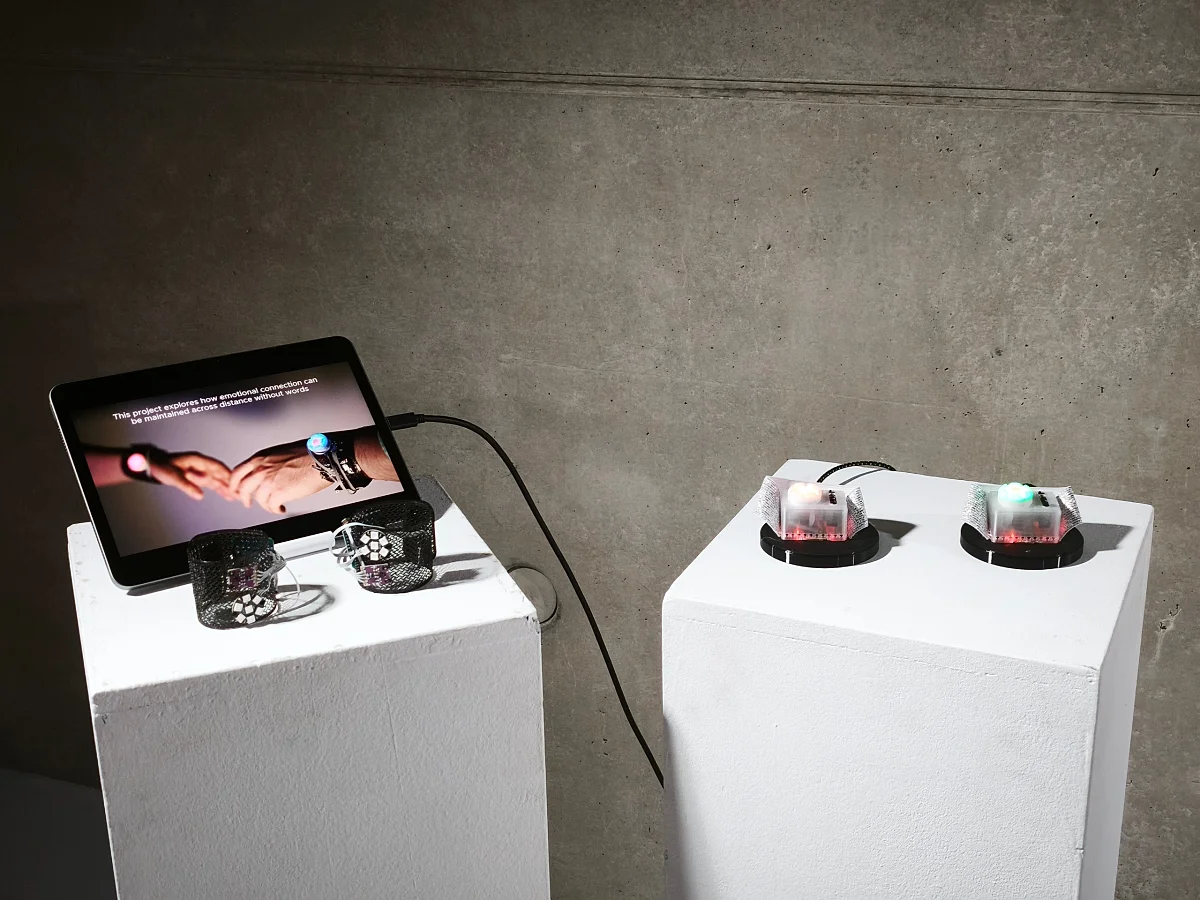
Alina Khisamova’s BeMySatl asks how technology can create a sense of intimacy and presence in long-distance relationships. The two connected wearable devices allow partners living apart to communicate without words. Customisable light signals, subtle vibrations and simple gestures can convey emotional states without the need for constant conversation.
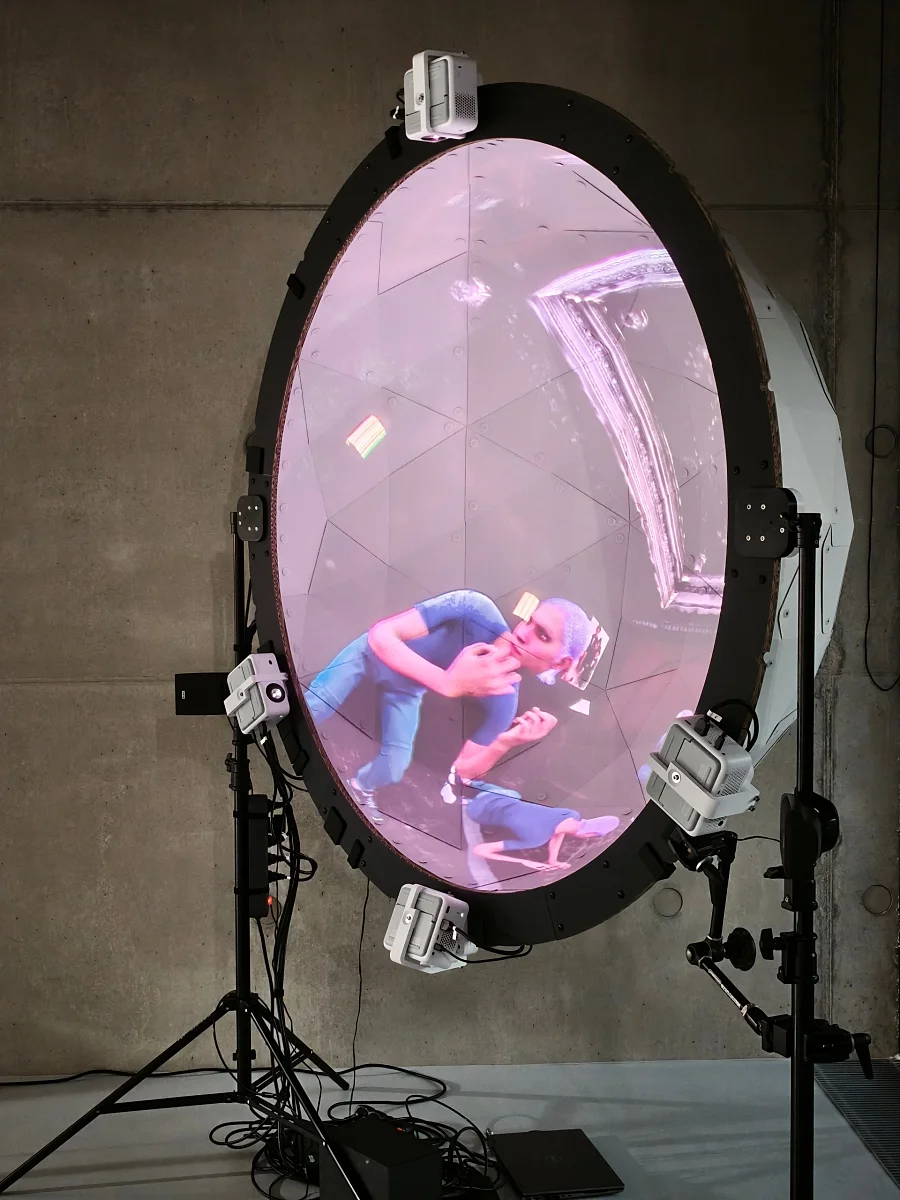
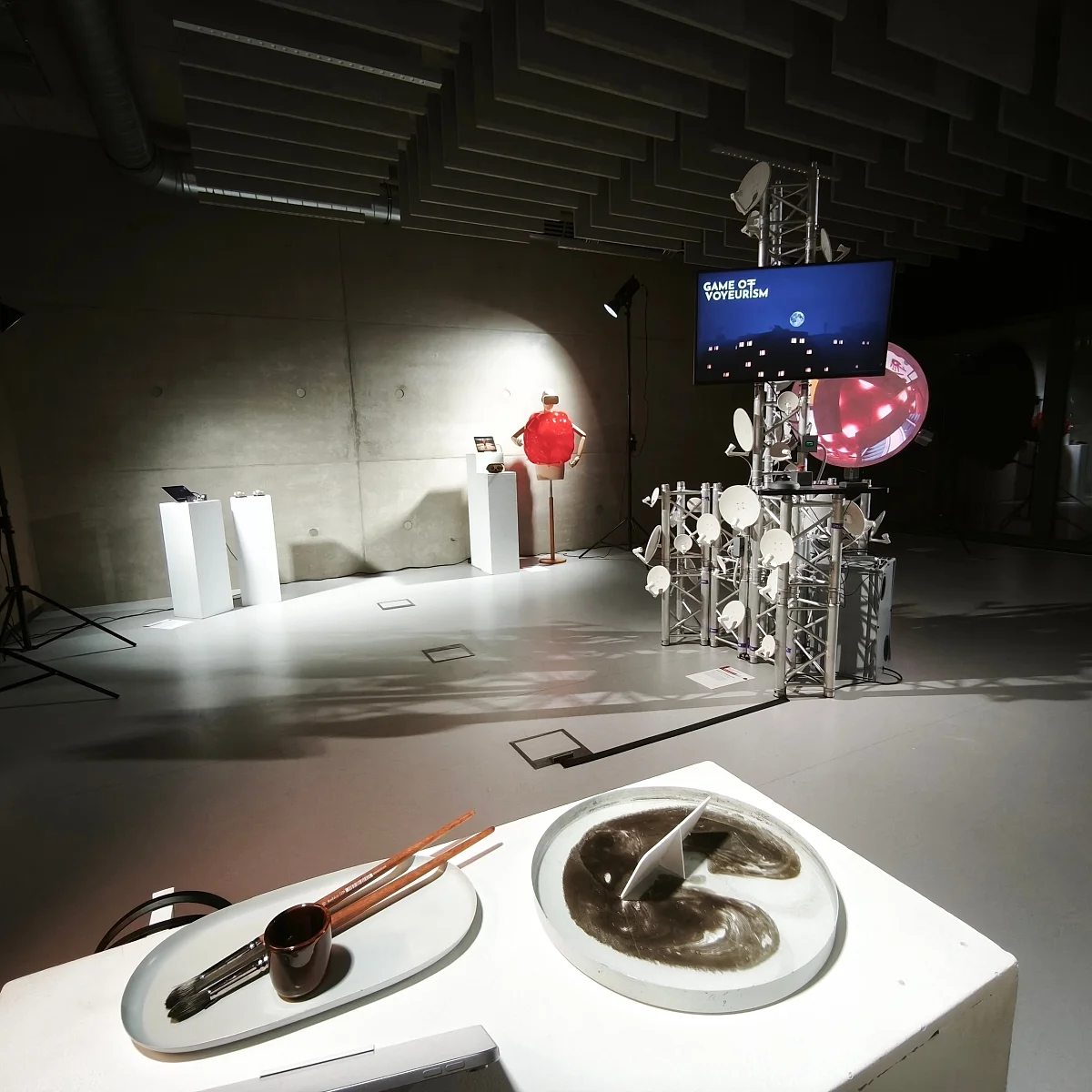
Boldizsár Csongor Nagy’s conceptual video game Game of Voyeurism draws attention to the downsides of connectivity, exploring the increasingly blurred lines and intersections between social media and private life. At its core is the normalisation of “cybervoyeurism”, driven by a combination of oversharing online and a lack of awareness of responsible digital behaviour. Taking on the role of a “virtual voyeur”, players move across the rooftops of tower blocks, tapping into antennas to listen in on anonymised confessions collected from social media.
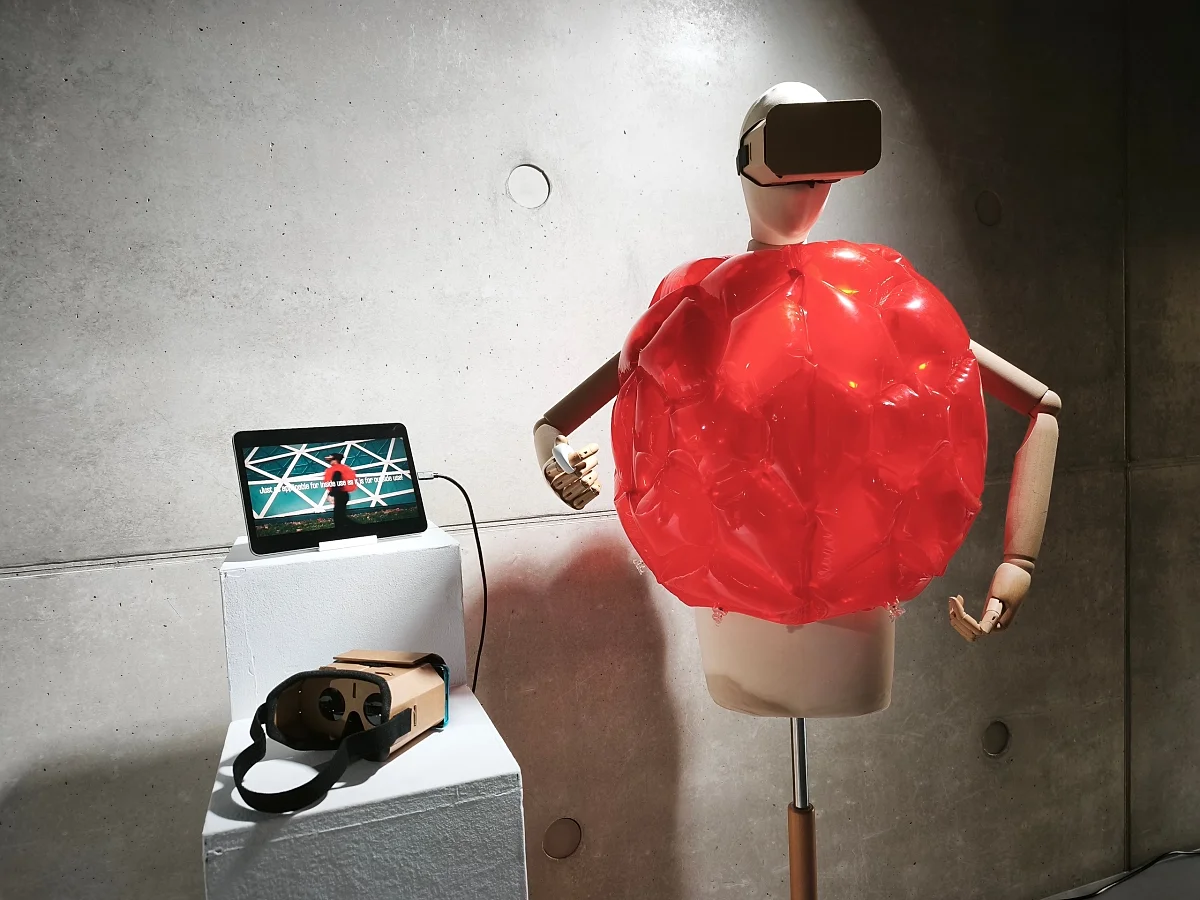
Kiss Sára Luca’s Scroll and Stroll also looks at the way we behave online. This speculative design project envisions a near future where doomscrolling has become an accepted – even pleasurable – part of everyday life, with technology designed to feed our appetite for an endless stream of content. The four components of the system include a helmet, an inflatable suit that protects users from injury, a ring that lets them scroll without using their hands, and a VR social media platform built around an endless feed of immersive 360-degree content. Rather than proposing a solution, Scroll and Stroll follows this scenario through to its logical conclusion, using exaggeration to reveal its potential consequences.
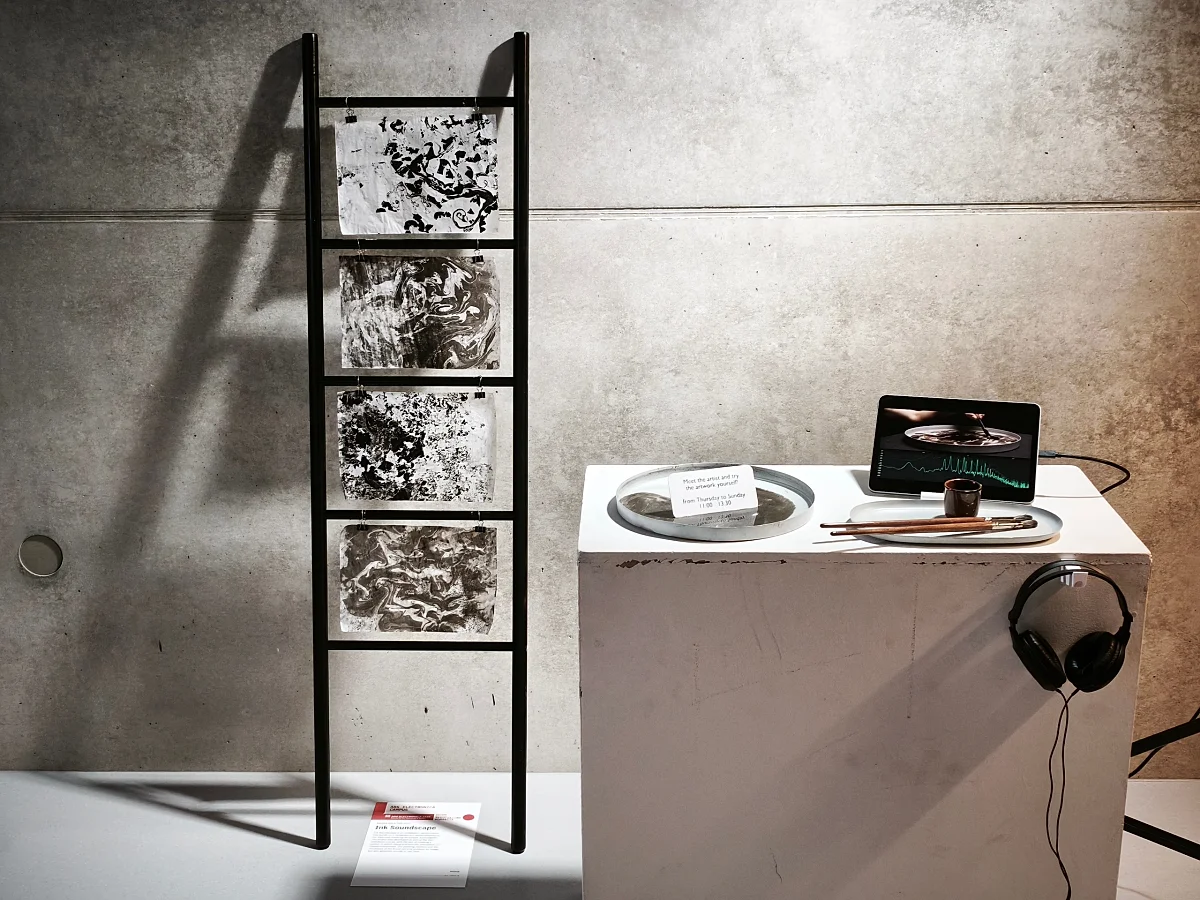
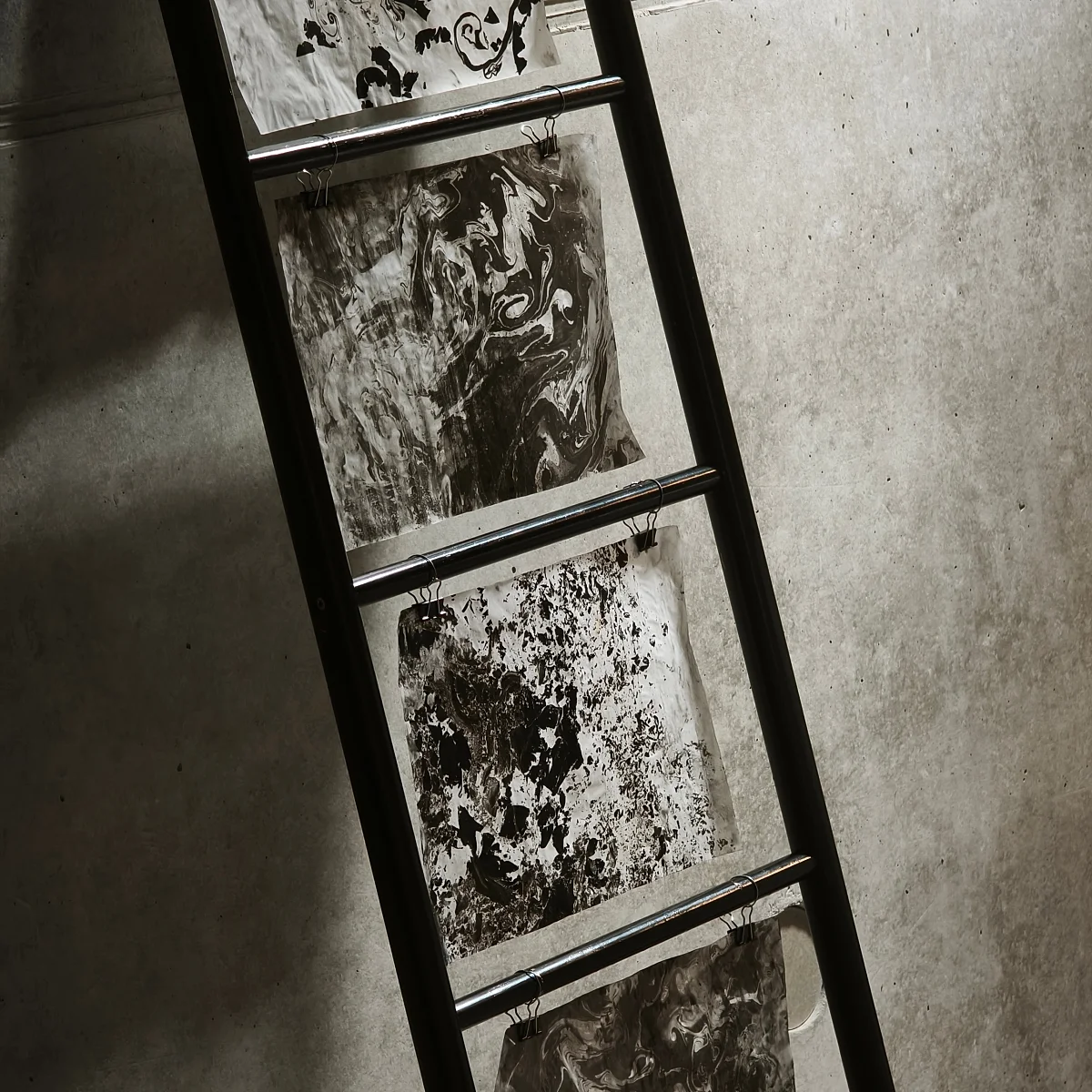
Katinka Klára Tóth’s installation and performance Ink Soundscape developed as part of the Soft Interfaces course reimagines suminagashi, the traditional Japanese technique of marbling on water. The movement of the ink and brush not only creates an image but also generates sound in real time, so that image and sound emerge from the same creative gesture. By combining digital and analogue processes, the project makes the creative process both visible and audible, creating a system that connects visual and auditory perception.
Combining artificial intelligence, music, and immersive filmmaking in 360-degree music videos, Immersive Beats is a series of audiovisual experiences resulting from a collaboration between Korean and Hungarian students. Working across different cultural and professional backgrounds, the participants also demonstrate how the creative process itself can become a space for dialogue about the role of technology.
The projects of Acts of Becoming do not offer a single, definitive vision of the future. Instead, they create situations that allow us to experience questions about our relationship with technology directly and consider them in a new light. The exhibition is curated by Dániel Cseh, Judit Eszter Kárpáti, Ágoston Nagy, and Esteban de la Torre, with Júlia Dóra Molnár and Tímea Varga as project managers.
MOME is taking part in the Ars Electronica Campus Exhibition programme for the third year running. In 2025, the university presented Gradual Exposure as part of the Campus Exhibition, which included student projects from thirty-seven universities. The five works featured in the MOME exhibition explored pressing issues such as disinformation, digital trust, climate change, and geopolitical tensions. Zsófia Kérdy and László Majsai’s Don’t Look Up! reflected on our collective perception of climate change; Lili Tóth’s Windows of Time looked out our relationship with time in the post-digital age; Gábor Gergő Péri’s Turn the Lights Off! examined the interconnectedness of global systems; while Viki Pere and Brigitta Burkus’s Attentive Tangible Interface focused on the tactile dimension of digital interfaces. In 2024, MOME made its Campus Exhibition debut as a specially invited featured university, presenting a selection of unique diploma projects.
Just like in previous years, the Pannonia Scholarship Programme funded the participants’ travel to Ars Electronica this year.
Continue to the Ars Electronica website: https://ars.electronica.art/negotiatinghumanity/de/view/acts-of-becoming-37a38ddb450c81ca919ada6ae453385a/
More news