Robots, AI, and hand-drawn thinking
Disegno – Drawing object in an international context
In the design sketch course led by Robert Toroczkay and Csaba Szegedi, students practised the core visual tools of product design using both manual and digital techniques. Each participant focused on analysing and drawing a selected object, gradually developing the study into a carefully edited poster with a clear typographic composition. The course was organised in collaboration with TU Darmstadt, where visiting lecturer Robert Toroczkay has taught for the past ten years.
Hidden Dimension – The specificities of upholstery
Led by Annabella Hevesi, the course brought together twenty students – mainly product designers, joined by architecture and textile students – to explore the technological and material aspects of upholstered furniture design. The week began with a workshop visit and an introduction to the relevant materials and construction techniques and concluded with a rapid design project with students developing and producing full-scale prototypes. The course offered an opportunity to rethink upholstered furniture as a complex structure in terms of construction and use.
From Aura to Algorithm – Analogue and AI in dialogue
The course Masters and Students in the Age of AI – Creative Learning Ecosystems explored the relationship between craft, canon, and artificial intelligence. Led by Dr Judit Horváth, participants studied the work of Sándor Mikó and Sándor Borz Kovács in the storage facilities of the Museum of Applied Arts. They created analogue responses to what they saw, which were then developed further the following day using artificial intelligence alone. Over the course of the week, they produced hand drawings, a crocheted object, and even a virtual issue of Ezermester magazine. They found that analogue work offered a more personal, engaging, and enjoyable experience, while also revealing the limitations and “hallucinations” of AI systems.
Drawing as a Mode of Thinking – Architectural space by hand
The course Shaping the Infinite and Being Shaped by It, led by Dr Péter Magyar and Zsófia Csomay, focused on the role of architectural drawing in the age of digital modelling. Thirteen architecture students developed concepts for a guesthouse planned for a campus courtyard through a series of freehand drawings, progressing from initial intuition to a functional spatial layout. The emphasis was not on the “finished building”, but on visualising the thinking process – in other words, drawing as the first physical trace of an idea helps better understand the architectural space and shape it into a buildable form. A key aim of the course was to draw attention to the importance of hand-based thinking and drawing as forms of expression in the age of digital modelling.
Applied Composition – Hearing a film anew
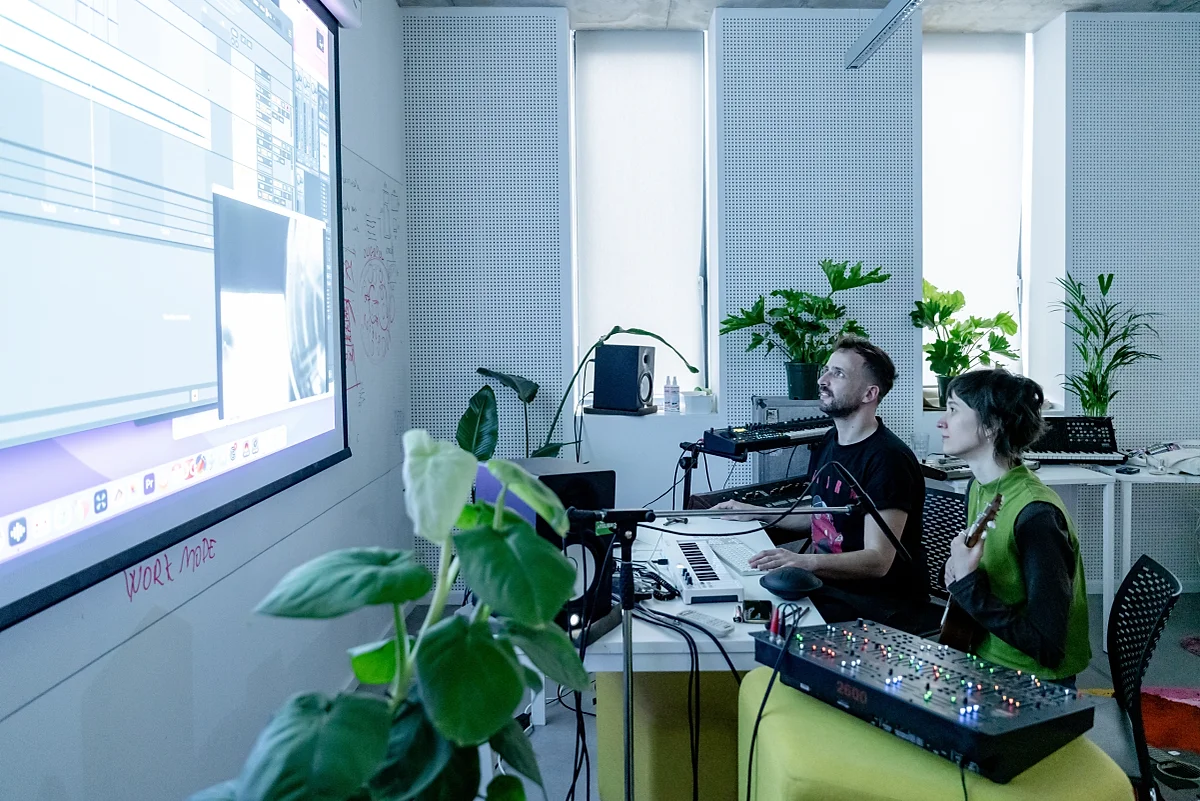
In József Iszlai’s animation course, sixteen students re-composed the soundtrack to Fernand Léger’s 1924 silent film Ballet mécanique. They worked with acoustic and electronic instruments, sampling, sequencers, and recording techniques, facing new methodological challenges each day. The aim was to understand the emotional and intellectual process of musical composition, even without prior musical training. The week culminated in a complex soundtrack created collectively by the group.
Robotics and Social Context
Boston Dynamics Director of HRI Design David Robert taught an intensive course together with Renáta Dezső as part of a collaboration between the MOME Interaction Design MA and Robotics Studio. Over four days, students developed AI-agent-based prototypes oriented towards physical AI, integrating them into the Mini-Reachy robot platform and testing interaction scenarios. Five application concepts emerged during the course, including Clefie, a robot designed to support music theory learning for children aged 6–11, a shopping companion for older adults, a prototype raising awareness of dementia, and the concept of an ultimate repair assistant. The course highlighted how design can play a decisive role in robotics development by defining the social context in which technologies operate, shaping not only their technical feasibility but also their relevance in everyday life.
Generative AI – Possibilities and contradictions
David Fathi’s workshop explored the creative possibilities and limitations of generative AI. Students experimented with tools for generating text, images, video, and sound, while also addressing questions of bias, contradictions, and ethics. One project developed a visual narrative of “fake science”, highlighting the persuasive power of AI-generated imagery and its potential for manipulation.
Open Art Actions – Experiments with coffee grounds
Organised as part the MOME ZACC project, the course aimed to foster a more environmentally conscious mindset among MOME’s lecturers and staff. Fifteen BA and MA students, following an introduction to ecophilosophy and ecocriticism, began a series of artistic experiments under the guidance of Dóra Szentandrási. Coffee grounds became the basis for both narrative and material experiments. The resulting works reflect on questions of responsibility, material use, and sustainability and will be presented in an exhibition at the end of 2026 together with further outcomes of the ZACC project.
Intensive Theoretical Workshops
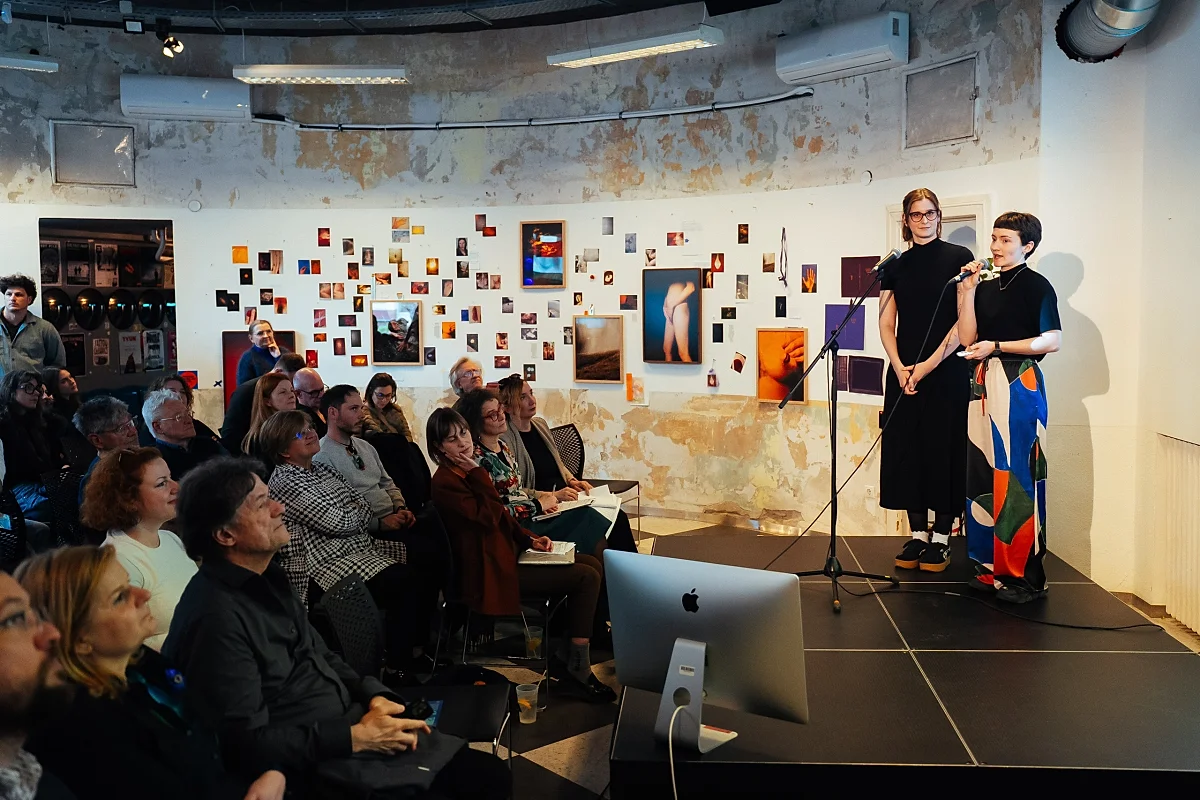
Alongside the BA and MA courses, the Doctoral School also joined the Course Week with events designed for doctoral candidates, offering intensive workshops with a strong methodological focus. Writing Workshop Level 1 explored the possibilities and risks of creative academic writing. Participants presented their own research and worked on selected text excerpts, paying particular attention to citation practices and the role of the first-person voice in PhD and DLA theses. Running in parallel, Prof. Jonathan Ventura led the Intensive Workshop on the Contemporary Roles of Design Anthropology, which addressed the current role of design anthropology, the place of visual mapping in theoretical research, and visual–material research methods. Both courses were designed to help participants take their doctoral research further and approach it with greater methodological awareness.
International lecturers at the spring 2026 Course Week were hosted through the MOME Global Voices programme. Once again, the Course Week demonstrated the breadth of practices at MOME – from hand drawing and material experimentation to composition, robotics, and artificial intelligence. Across the courses, the common thread was thoughtful creative work: exploring how design can respond consciously, responsibly, and critically to today’s technological, social, and environmental challenges.
More news