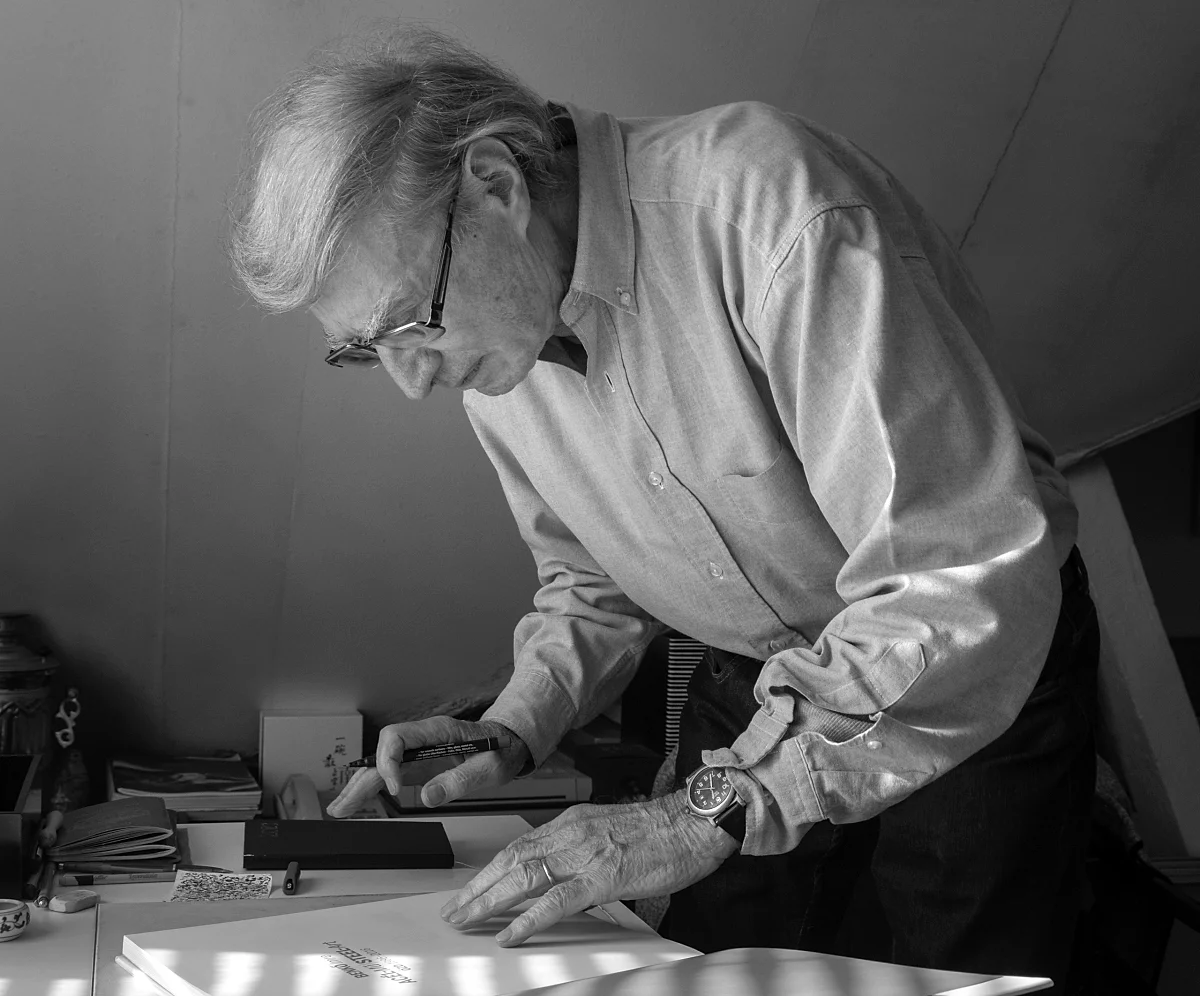
“…I pretended I was photographing for him…” Remembering the teaching career of Imre Benkő
Many of his former students are now leading figures in contemporary Hungarian photography, including András Fekete, Gábor Máté, Péter Rákosi, Krisztián Kiszely, Gábor Arion Kudász, Zoltán Molnár and many others.
Among those he taught in Zugliget, Zoltán Molnár had a joint exhibition with him at Mai Manó House that closed just ten days before his death. In Molnár’s words, “The preparations for the exhibition, the conversations, the professional advice he offered so freely to me and, I imagine, to so many of his former students, remain etched into my memory. He wanted to understand people and help others understand them too: the lives they led, the places they inhabited, the worlds he photographed. He was endlessly curious, playful, and restless, an acute and exacting observer of the world he became part of. His images revolve around human relationships, a deep compassion for those pushed to the margins, and an unreserved openness towards others.”
The same sense of wholehearted commitment was highlighted by Head of the MOME Doctoral School Ábel Szalontai, one of Benkő’s former students, when he opened the photographer’s retrospective at Kunsthalle last year. He described Benkő as someone who was present not just in a physical sense: he engaged mentally and emotionally, giving his full attention and focus to whatever he photographed. In doing so, Benkő opened up aesthetic, ethical, and psychological dimensions, giving us a deeper understanding of what it means to be human. Growing up with Benkő’s guidance was a gift, Szalontai said.
Benkő’s influence could be felt even when he was not physically there. Reflecting on his time as a student, Head of the MOME Centre for Photography Gábor Arion Kudász recalled: “We were expected to photograph the 15 March commemorations and the Ballet Institute. I happened to be on a scholarship in Cluj at the time, and because he didn’t want me to miss out on what I could have learned in Budapest, he sent me to the ballet institute there so I could master the basics of reportage. While working, I would imagine I was photographing for him. I prepared for consultations by picturing the images I would show him, wondering what he might say about them.”
In one group of his works, the disillusionment of the socialist past and the years of transition stands in counterpoint to the accidental, enigmatic moments of everyday life and celebration. His long-term photographic essays – from the stages of the decline of the Ózd steel industry to the unruly, ritualised concert scenes of the Sziget Festival, or his series on twins – offer a richly detailed record of processes unfolding over time. Photography, as Benkő taught it, is not simply a tool in our hands but a form of responsibility, a heightened sensitivity to the world – something he could scarcely have conveyed in any other way.
More news