From the university bubble to the business world: Introducing MOME Incubation
Perhaps I do, although I didn't study at MOME. I took a design and business course in Denmark, where we worked in teams on real-world projects and developed a strong entrepreneurial mindset alongside our professional skills. I went on to work for a fast-growing fashion brand in Madrid, where I saw how rapid expansion can destabilise even a successful business. Later, I started my own company, building a backpack brand organically over ten years with a Slovenian business partner. Along the way, I realised that many talented people of my generation lacked the business knowledge they needed to succeed in the market.
When did you first realise you wanted to pass on what you'd learnt and bring that experience into education?
After we sold the backpack brand, I joined MOME and began thinking about how we could help students take the ideas they'd developed for their courses further and turn them into businesses. Together with my colleagues Máté Barna and Andrea Schmidt, I developed a course called Business to Design for BA students. In many ways, this introductory course laid the groundwork for the innovation programme.
How do you select participants? How can you gauge someone's motivation from an application or an interview?
The students who have completed the course are well placed to take the next step with our support, if they want to. So neither the incubation programme nor the business programme starts from scratch. There are many factors to consider, but one is how someone lights up when they present their project, or talk about their plans. We once had an applicant who told us right at the start of their interview that they would pursue their project whether or not they got into the programme. When someone says that with genuine enthusiasm and confidence, you believe them.
Twenty participants started the programme, but only fifteen pitched at Demo Day on 2 April. Why did five drop out?
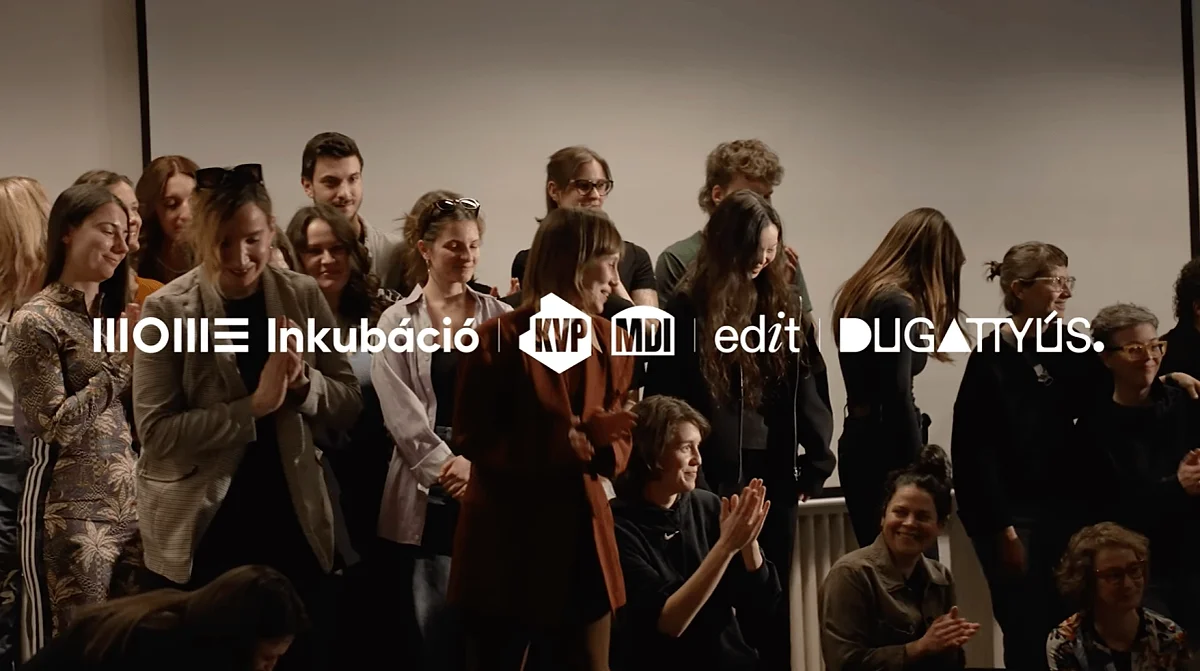
In the end, eight incubation projects and seven creative business projects were presented at Demo Day, which I’d call real success. As for those who dropped out, without prior experience, it's very difficult to judge how much time, energy and capacity a project will require, or what's realistically achievable within a limited timeframe. Halfway through the six-month programme, everyone had to take stock of how much progress they'd made towards realising their original vision and decide what they could realistically accomplish in the time remaining.
Developing a product, a service, or a community-building platform calls for a different kind of mentoring from research into a work of critical art. How do you match participants with mentors and run the incubation programmes across such a wide range of subjects and disciplines?
MOME Incubation has two strands: the Art and Design Incubation Programme and the Creative Business Programme, which is making its debut following a pilot year. The former is somewhat more straightforward, as participants generally continue working with their previous supervisors. The Creative Business Programme is considerably more complex and has been developed specifically around the needs of MOME students. Many students have told us that once they graduate and start working, their priorities change. Even if they have the time and energy to continue developing their diploma projects, they no longer have access to the university's facilities, workshops, and equipment. Equally important is a supportive community that offers honest, constructive feedback, and the professional network they've relied on throughout their studies, which can weaken or disappear once they leave the university bubble. Through the programme, we aim to meet these essential needs of young designers. My colleague Bori Kovács and I do our best to find a mentor for each project with expertise in that particular field. In the Art and Design Incubation Programme, this is often the student's former supervisor, who already knows the project well and is committed to it. In some cases, however, a young designer may be better placed to achieve their goals with a different mentor.
What paths can participants take?
We essentially support three main career paths. The first is applied research, which can serve as a stepping stone towards doctoral studies. For students pursuing an independent artistic career, we provide the stability and support they need to prepare for professional practice and build a strong portfolio before entering the art world. The third is product and service innovation, with a particular emphasis on development. If participants succeed in turning their ideas into market-ready products or services, they may be able to move on to the Creative Business Programme the following year. It is open both to current students and to those who graduated within the past three or four years.
What kind of advice do you offer?
We have a team of twelve specialists covering a wide range of fields, including tax advisers, accountants, lawyers, brand managers, brand strategists, service designers, and experts in the nonprofit sector and fundraising, all with experience of working with creative businesses. Several of our mentors are entrepreneurs themselves, so they can draw on their own experiences to offer practical, credible advice, not only on the products or services participants are developing, but also on the business side of things.
What's the difference between the two programmes?
Participants in the Art and Design Incubation Programme receive a grant that can cover the cost of producing a prototype, whereas the Creative Business Programme offers no financial support, placing much greater emphasis on professional mentoring. This is complemented by a more structured approach to learning: an online platform with business development videos that participants can use as a guide, alongside workshops covering everything from brand strategy and financial sustainability to AI. Together, these help designers validate their work as effectively as possible.
...but the two programmes have similar goals...
We want participants to step outside their comfort zones as early as possible, so we try to create a safe, supportive setting where they feel confident taking the next steps, whether in developing their product or structuring their business. One exercise I use is to ask them how they could generate enough income to make a living from their project within two or three months. And that income might not necessarily come from selling the product itself.
Is that a teaching or mentoring technique?
Not really. It comes from personal experience. I came to MOME with a background in creative entrepreneurship, and I'd had to make that decision myself in the real world. In 2011, a friend and I enthusiastically launched our backpack business. We developed a few basic models, put them up on an online shop and waited for the orders to roll in. But nothing happened. We'd already spent five or six months working on nothing else, and only had enough savings to keep going for another two or three. We knew that if we went back to full-time jobs elsewhere, the business would remain a hobby. But if we wanted to make a real go of it, we'd have to take a risk. Since we'd designed the backpacks specifically for cyclists, we sent our press release to a few international cycling blogs. One American blog picked up on our story, and it happened to be highly regarded for its design coverage within the industry. Suddenly, orders started pouring in. We weren't prepared for requests for thousands of bags, as the two of us were still sewing them ourselves at the time, but at least we were now in control of our own decisions. Of course, things were different back then. Customers were willing to wait, for example. Still, an experience like that really puts your commitment to the test.
Things certainly are different today...
That's why we start the programme with a goal-setting workshop, where participants identify a realistic target for the end of the six months, and a research workshop, since research is essential at every stage of the innovation process. This is where we validate the concept and begin prototyping and testing. We also hold monthly group consultations with invited experts, where participants from both the incubation and business programmes give five-to-ten-minute updates on their projects. Each time, they pitch to a different guest, so they benefit from feedback from a variety of perspectives.
If someone is interested in joining the Art and Design Incubation Programme or the Creative Business Programme, how and when can they apply for the next round?
We announce the new programmes in mid-May, with applications open until the end of June. The programmes begin in September, alongside the academic year, and run for six months, ending in late March 2027. We're planning to take on ten participants in each. In the latter, as usual, we aim for an even balance between research, artistic practice, and service innovation. It's not yet clear whether any of this year's Incubation participants will move on to the Creative Business Programme. If they feel they need that additional support and are committed to taking the next step, we'll certainly find a way to accommodate them. As I mentioned, we tailor our programmes to what students need.
What’s next for the Art and Design Incubation Programme and the Creative Business Programme?
The key is to keep attracting highly motivated, committed teams pursuing a diverse range of projects. Ultimately, the quality of the programmes is what makes further development possible. That strong foundation gives the programmes visibility, while the mentors and supporters involved lend them the prestige that makes students keen to take part, whether during their studies or after graduation.
Applications: https://mome.hu/en/creative-business-program és https://mome.hu/en/creative-business-program
More news