Researchers' Night
The programme will feature hands-on workshops, guided visits to studios and labs, an exhibition, and a Pollinator Tour. You can learn about the pitfalls of artificial intelligence, try out a new app that exposes distortions in visual culture, and take a closer look at the FRUSKA project, designed to boost the confidence of young girls with disadvantaged backgrounds. Further highlights include the Edible Data workshop, where food becomes a tool for exploring the stories of Lake Balaton, the Domesticated Wilderness workshop
presenting digital visualisations envisioning what the Balaton region might look like in 25, 50, or even 75 years’ time as global temperatures continue to rise, and the related tasting event with edible wild plants likely to feature more prominently in the landscapes of the future. You can also tour MOME’s Tech Park and follow the journey of urban bees on the Pollinator Tour, starting from Déli Railway Station. MOME contributes seven events in total, with two requiring registration.
Workshops
Climate change affects all our lives, yet the scale and complexity of the changes it brings can be hard to grasp. Can you picture how Central Europe’s largest lake, Balaton, and its surrounding landscape might transform over the coming decades? Which plants might disappear, and which will thrive in a warming climate?
This workshop offers a glimpse of the future through landscape visualisations paired with a unique tasting of plant-based foods. Digital images show how the Balaton region might look in 25, 50 or even 75 years’ time if global temperatures keep rising at the current pace. At the tasting, you can try edible wild plants set to become increasingly common in the landscapes of tomorrow.
The session highlights the contribution art can make to science, drawing on its tools and perspectives to address pressing challenges and to share new ways of thinking with a broader public.
Try our Bias!Busters quiz app.
Generate images, spot and identify stereotypes, and learn where AI image generators make mistakes that are almost invisible but still significant.
What kind of face does AI draw for us? Why do figures in Hungarian folk dress look like “Slavic beauties” in AI-generated images? How does the Statue of Liberty end up floating in the Danube? What picture of Hungarian culture does an image generator create? This interactive workshop looks at how AI “pictures” us, and the distortions it introduces along the way.
You can write your own prompts and generate images with AI, then compare the results with other visual representations of the same themes. Together, we’ll investigate the distortions that image-making AI models build into their output and seek to find out what a “fairer” way of training these models might look like.
Bias!Busters app demo and test
Bias!Busters is an app created for secondary school students by the Heritage in Motion Lab in collaboration with MOME students to help high schoolers recognise false visual cues hidden in AI-generated images. Be among the first in Hungary to try out this brand new tool!
FRUSKA is a design-based development method for disadvantaged girls. By combining self-awareness and creative tasks, it helps strengthen their autonomy and confidence. Now in its fifth year, the programme travels the country in a converted van turned into a mobile workshop, to work with girls’ communities in rural areas. The goal is to disseminate the method more widely, strengthen peer-to-peer ties within the target groups, and foster collaboration among the professionals who work with them.
Throughout the Researchers’ Night, the van will be open to explore, the tools will be available to try out, and project owner Janka Csernák will present the research background and the scientific results achieved so far.
A creative workshop where food becomes a way to explore the stories of Lake Balaton. Participants will write, share, and taste while reflecting on how the lake’s environment is changing. Through playful activities personal memories turn into edible experiences that connect people of all ages to the lake’s ecology.
The workshop will be conducted in English, with an interpreter available for assistance.
Time
Description
Registration
Time
5:00–7:30 p.m.
Description
Pollinating insects in the city require a steady supply of food and shelter to survive. This guided tour explores both through Pollino insect hotels and urban bee pastures, offering a glimpse into a world that might appear dull, but is in fact buzzing with life and variety. Different levels of engagement along the way will help you connect with the life of pollinators and build a deeper understanding of their importance.
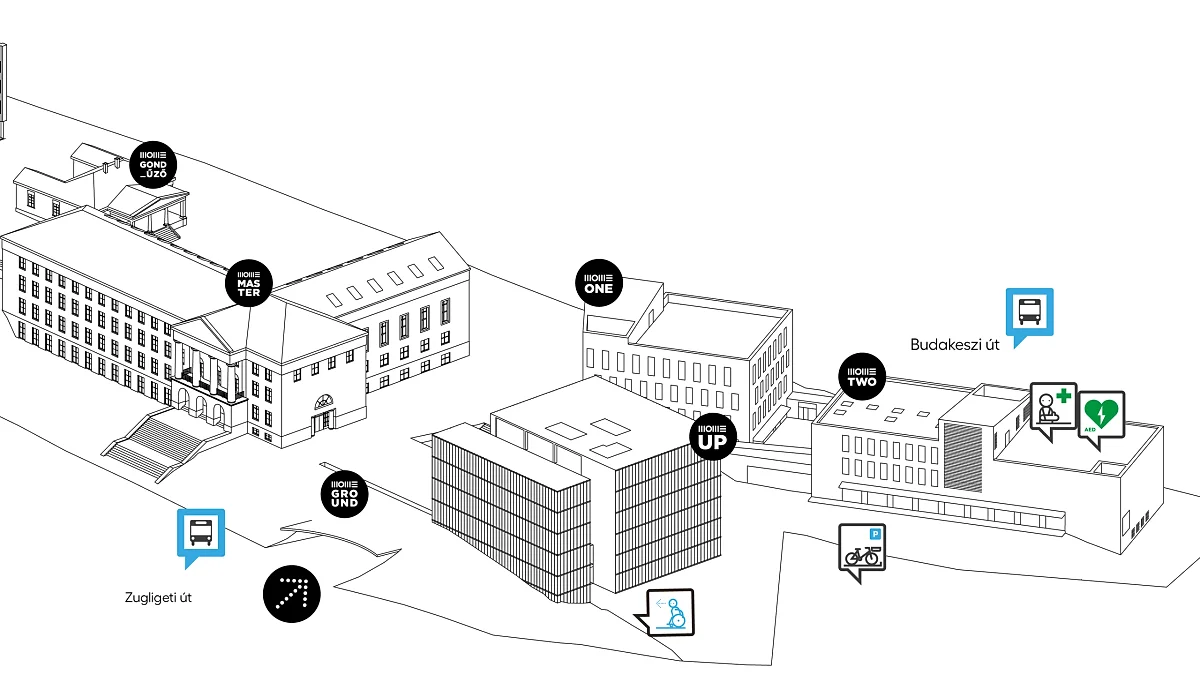
The meeting point will be at the Apor Vilmos Square bus stop for the 105.
Registration
Description
Tours
Registration
Explore MOME’s TechPark during the Researchers’ Night.
Description
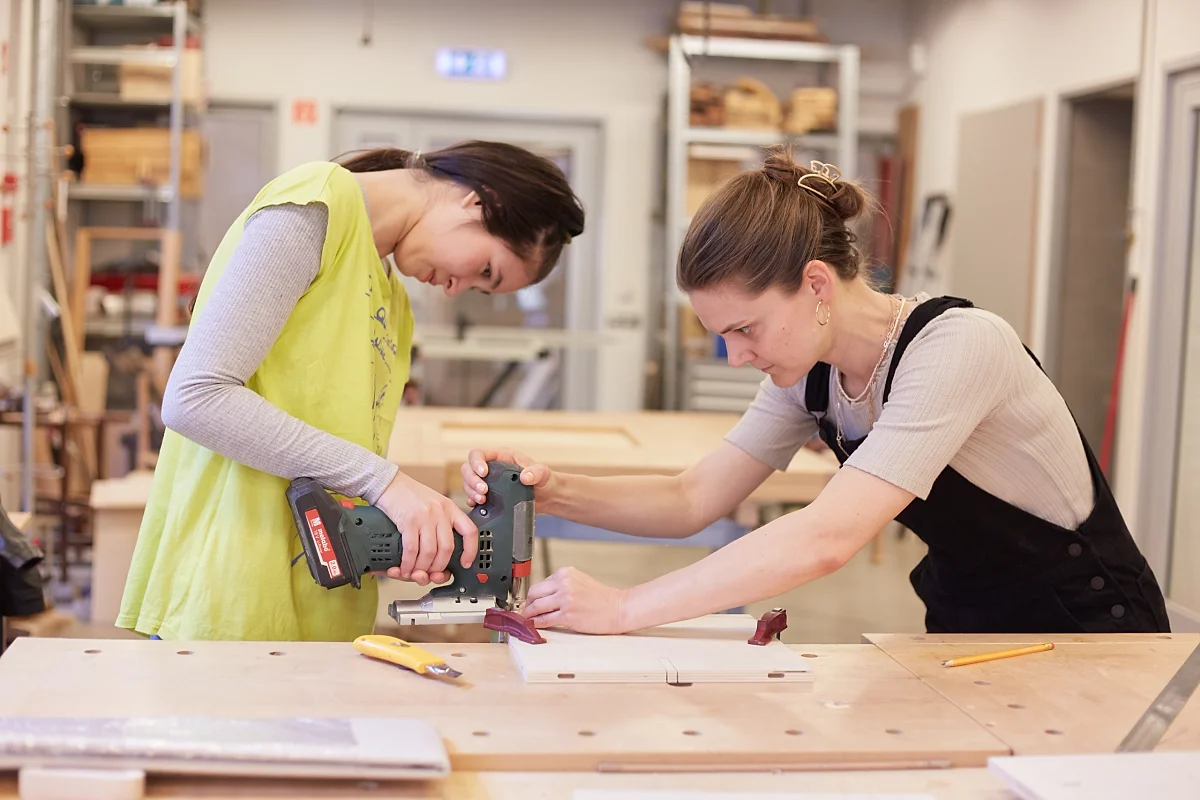
Did you know that the MOME Campus is home to a place where cutting-edge technologies meet traditional craft expertise? This is the MOME TechPark – a space for creative innovation and experimentation.
The TechPark is not only the centre of hands-on training for students but also an inspiring environment for anyone curious about how ideas can be turned into objects, materials, and forms. It houses a wide range of workshops and studios: fashion and textiles; metal and wood; ceramics and glass; and a digital fabrication suite.
On the Researchers’ Night, guided tours will take you inside this unique facility and show you how it works. You can step into the workshops, see the tools and technologies available to students and researchers, and experience first-hand what makes this such an exciting place to work.
Tours
Tours run at 4:00 p.m., 5:00 p.m., and 6:00 p.m.
Registration
Description
Venue
From studio to lab: What is an art and design university doing at the Researchers’ Night?
Description
Art and design are not just about creating or designing – they are increasingly vital to how we understand and shape the world. Artistic and design research are now globally recognised academic fields with their own methods and tools. This kind of research can uncover forms of knowledge that are often beyond the reach of traditional scientific approaches. What sets art and design apart from classical science is that they do more than study what already exists – they also use imagination and creative methods to explore what might be. As Herbert Simon put it, “The natural sciences are concerned with how things are, design on the other hand is concerned with how things ought to be, with devising artifacts to attain goals.”
Artistic and design research blend creation, experimentation, and analysis, and thrive most in interdisciplinary settings. Abductive thinking – the ability to generate new ideas and solutions from incomplete information – plays a crucial role here. This allows art and design not only to create objects, systems, or services, but also to generate new perspectives and ways of thinking that help shape the future of society, culture, and technology. Collaboration between art, design, and science is therefore not just useful but essential in understanding today’s complex and often uncertain issues and in providing responses that are human-centred, and sometimes even more-than-human.
During the Researchers’ Night we will present the main lines of art and design research, along with specific research projects.
Venue
Gond-űző
Interview on the research

– who held a masterclass in June 2025 at MOME
The event is funded by the National Research, Development and Innovation Fund of the Ministry of Culture and Innovation under the university's science communication programme.