Step by step towards a greener future – MOME’s Community Garden is now complete
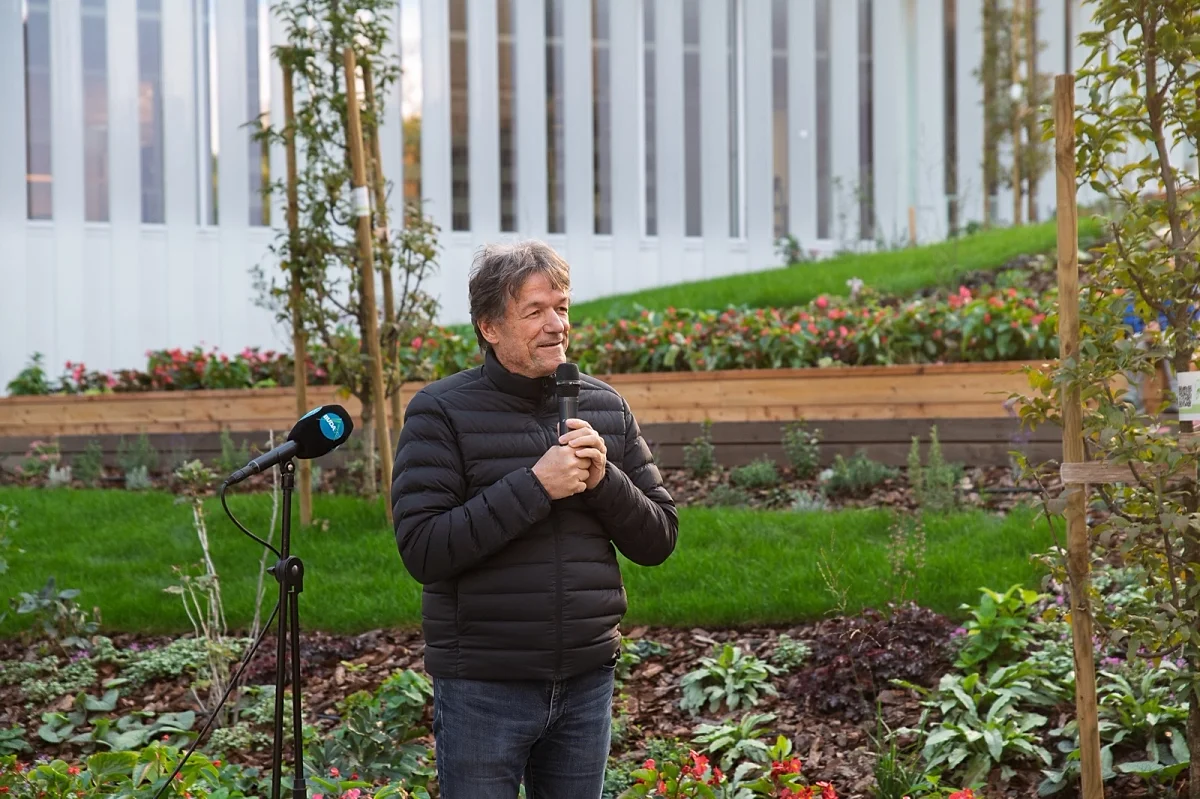
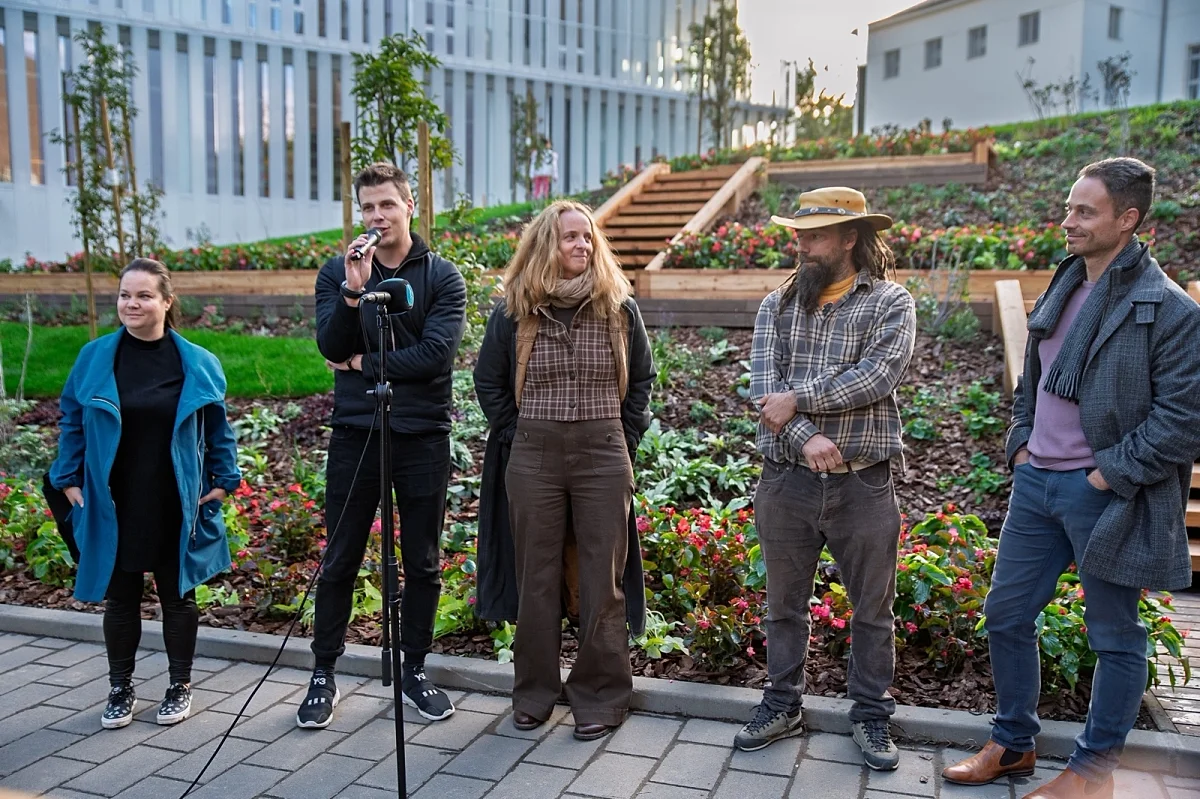
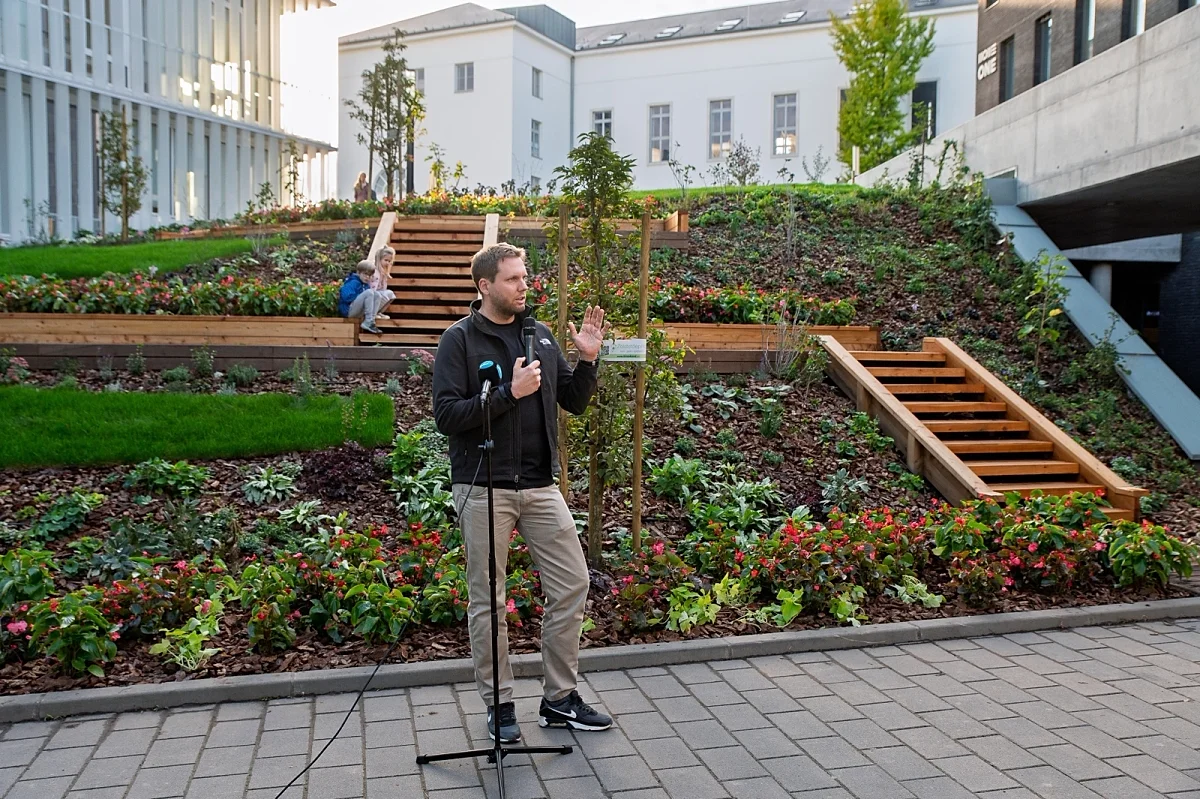
In his opening speech, President of the Board of Trustees Gergely Böszörményi-Nagy reflected on the deeper meaning of a garden, describing it as an expression of how we see the world: it follows a unique concept that builds on local characteristics, celebrates diversity, and requires long-term care and responsibility. Interim Rector Csaba Kovács also emphasised that gardening is a continuous commitment to the natural world and expressed his hope that the new garden will truly become a shared space – one shaped by the active participation of students, faculty, and staff.
“Why does a university need a community garden?” asked Head of the MOME Office for Ecological Sustainability (MOME Zero) Dániel Barcza. Beyond achieving full carbon neutrality by 2030, the university is committed to gradually reducing its ecological footprint through energy efficiency improvements, sustainable operations, and nature conservation partnerships. The newly opened Community Garden plays a key role in this vision: it supports local biodiversity while also helping students understand how to live in harmony with their environment and surrounding ecosystems.
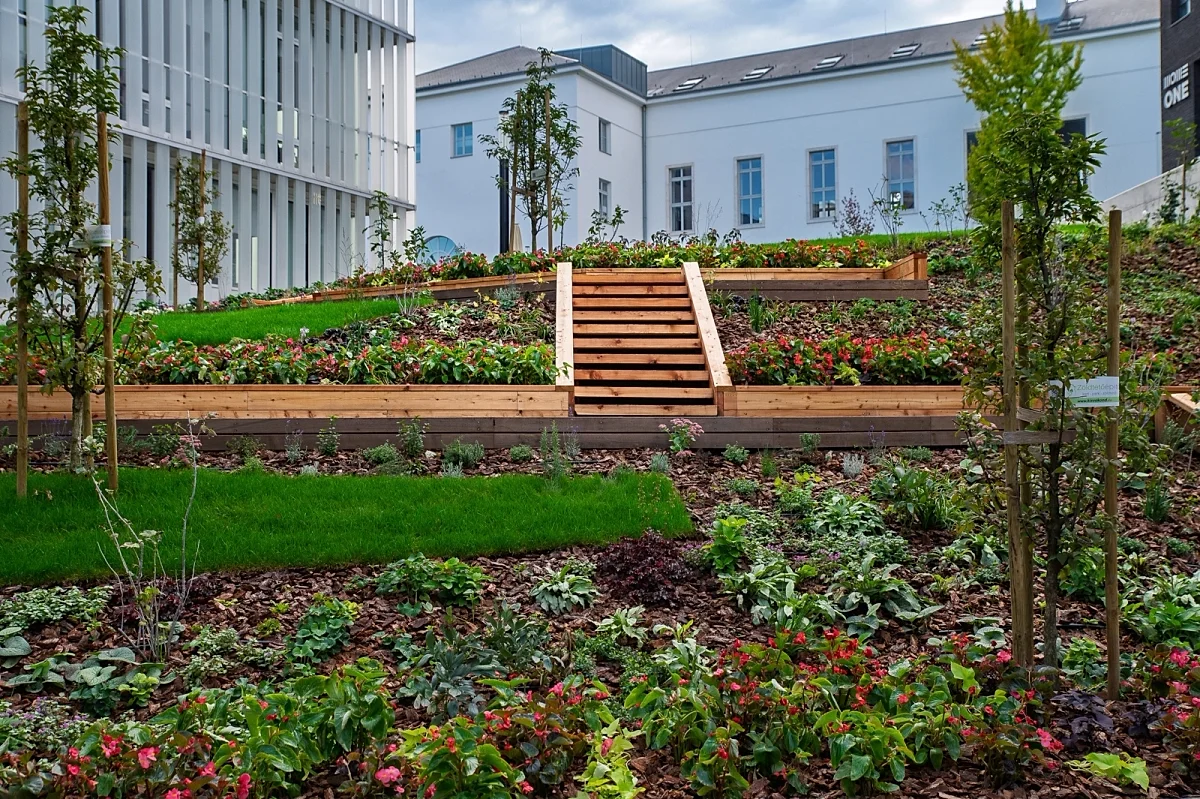
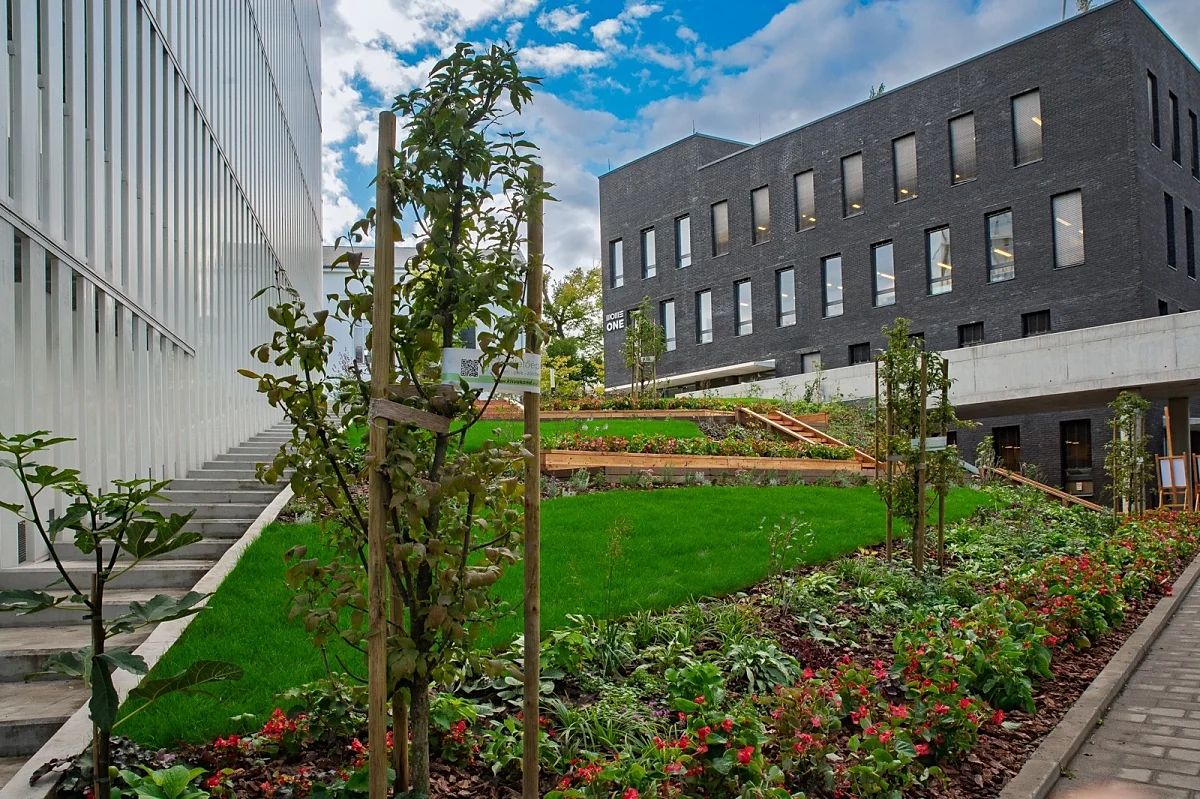
The MOME Community Garden marks the third major milestone in the university’s sustainable park development, following the rooftop garden opened in 2023, which also serves as a bee pasture, and the green Amphitheatre completed in 2024, a space for shared meals and community events. Covering nearly 500 square metres, the community garden was designed in the spring of 2024 by MOME students as part of a dedicated design course led by landscape architect Veronika Pápai, with professional guidance from István Márkuly and the Életfa Permaculture team. A total of 18 students from various programmes – including Photography and Graphic Design – took part in the course. Construction was carried out by Kisvakond Zöldtetőépítő Zrt.
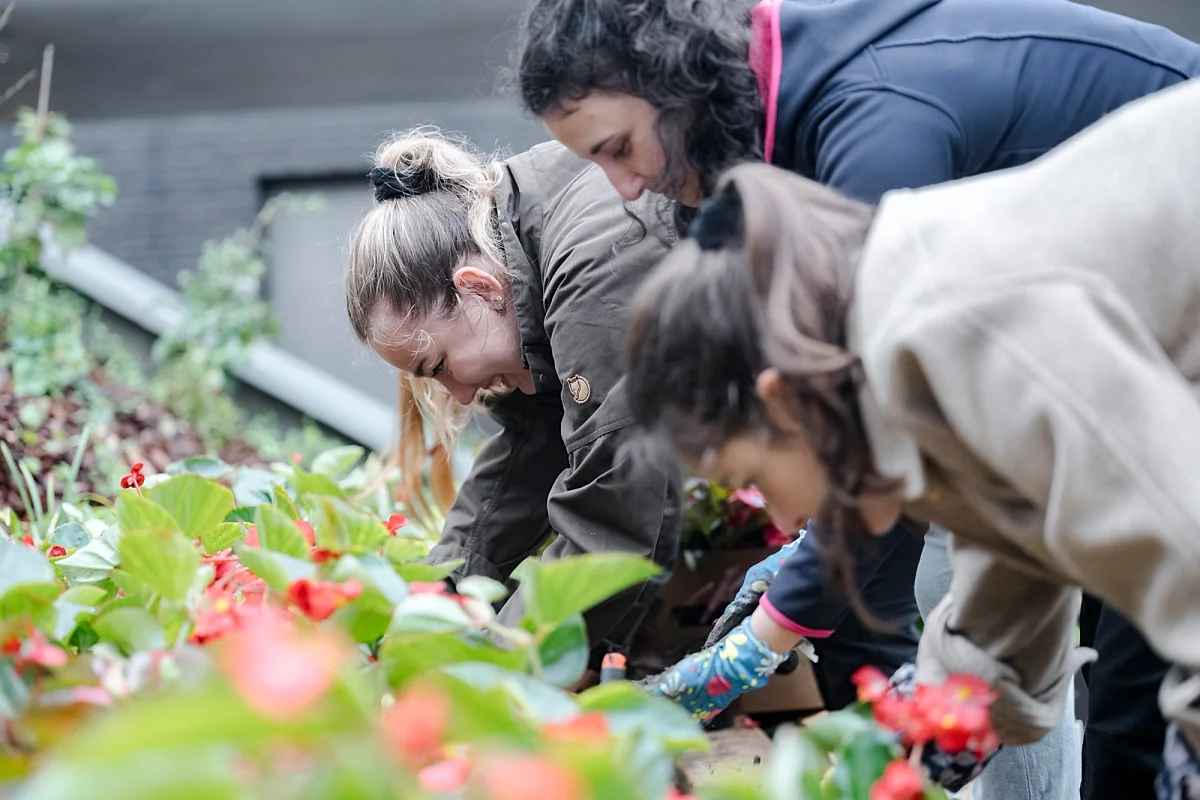
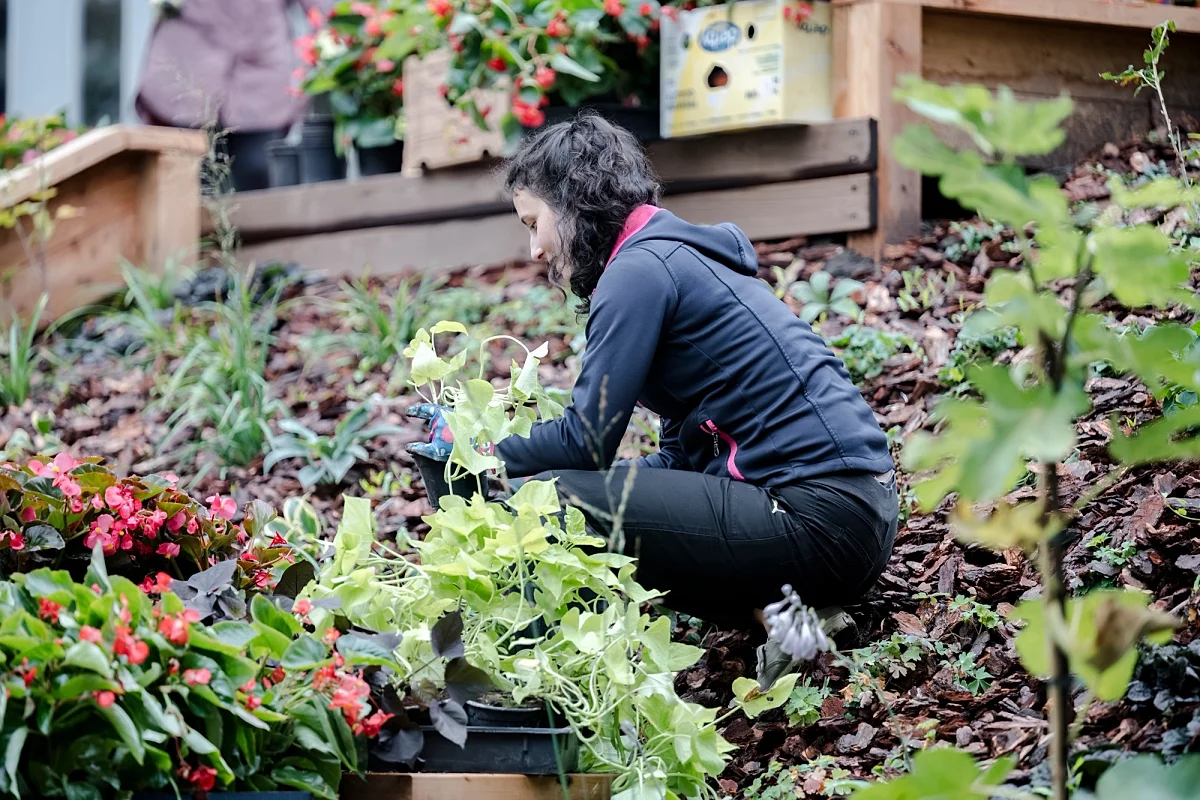
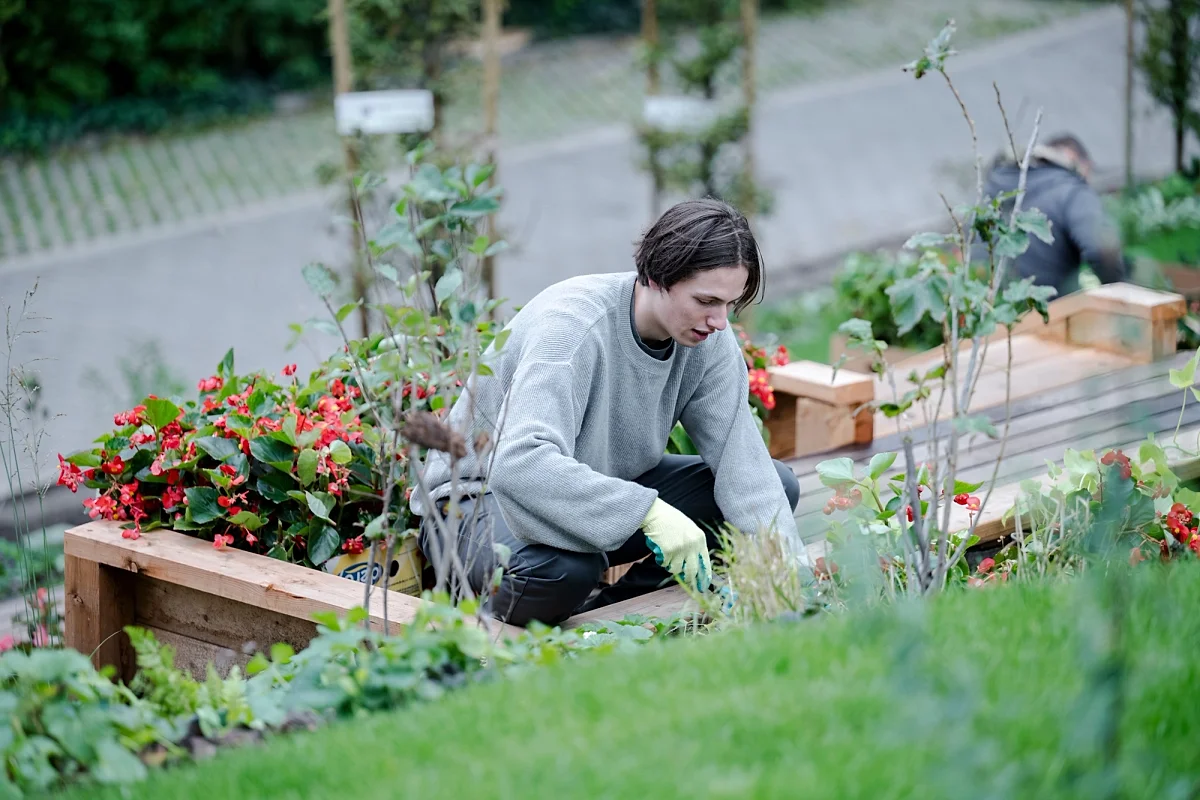
Designed based on permaculture principles, the garden is planted with carefully selected herbs, dye plants, shrubs (such as thyme, oregano, meadow sage, and violet), as well as shrubs and fruit trees (including fig and serviceberry) that form a natural ecosystem. Rather than depleting the soil, they enrich it and enhance the campus’s biodiversity. The garden also includes six to eight experimental plots, which were first planted last week by members of the university community under the guidance of the MOME Zero team. Each year, new plant species will be introduced to the plots and will provide fibres, pigments, oils, or other raw materials for teaching and research projects. University citizens can apply annually to make use of the experimental plots.
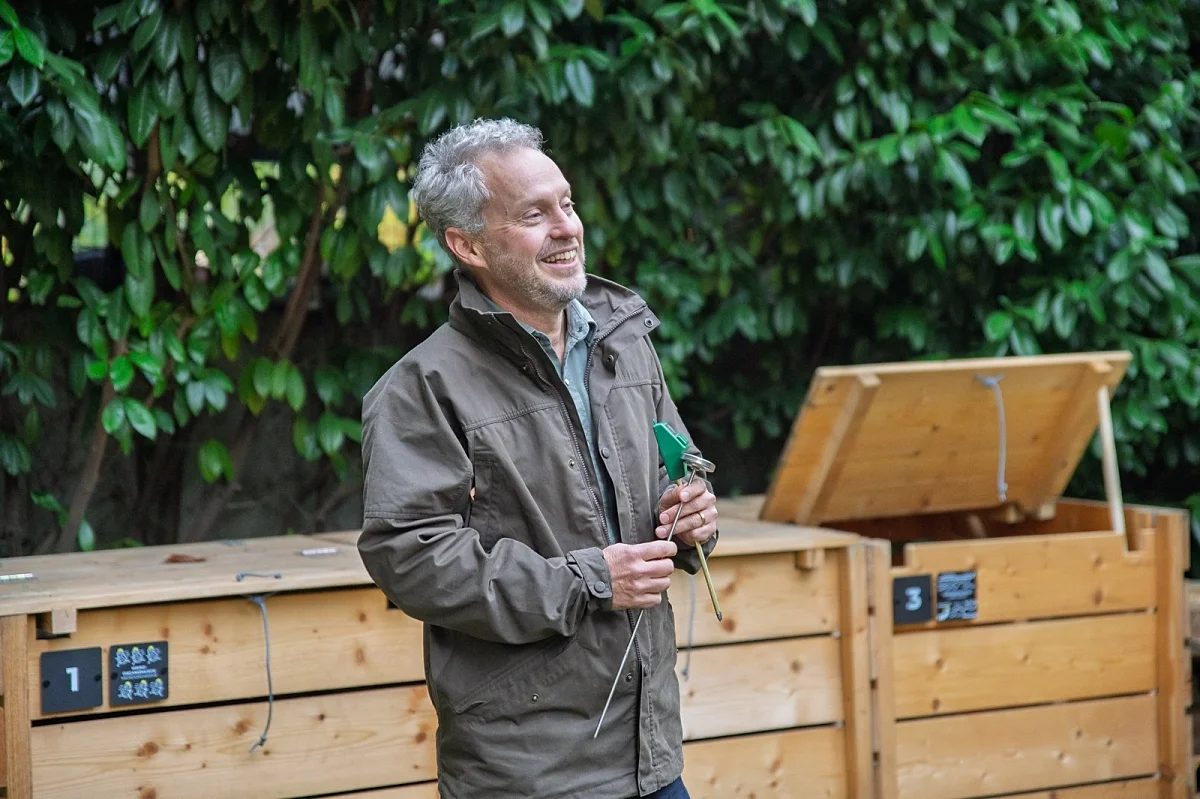
The MOME Gilisztár composting station next to the garden was also developed with student involvement to turn campus green waste into humus, feeding it back into the nutrient cycle of the MOME Park. Another key sustainability initiative on campus is the MOME Apiary, home to several bee colonies that help maintain ecological balance through pollination, while their annual production of honey, propolis, and beeswax also supports the university’s educational activities.
Together, these initiatives are helping transform MOME’s campus into a greener, more sustainable, and more environmentally aware institution, where students and staff are actively involved in processes that foster harmony with the natural environment.
The MOME Gilisztár community composting station and related events are funded by the MOL – New Europe Foundation’s Green Oasis 2025 grant.
More news